What Is Embedded AI and Why It’s Changing Modern Hardware

Discover how the ability to “think” locally is transforming ordinary devices into intelligent, autonomous equipment—from your smartphone to industrial factories.
Imagine waking up to find your smartwatch has already detected your restless night and automatically adjusted your daily schedule for lighter tasks. Meanwhile, your security camera ignores a cat moving in the yard but instantly alerts you to an unfamiliar person in the garage—all without relying on the internet. This magic doesn’t come from distant servers, but from a silent revolution: Embedded Artificial Intelligence.
Unlike the traditional AI we know—which sends data to the cloud and waits for responses—embedded AI is the ability to process complex machine learning algorithms directly on the device. It’s like replacing an employee who needs to consult a manual for every decision with an expert who makes decisions on the spot, with built-in knowledge.
This is no longer future technology. It’s inside your smartphone, your car, hospital equipment, and even sensors in crop fields. And it’s radically redefining what our devices are capable of.
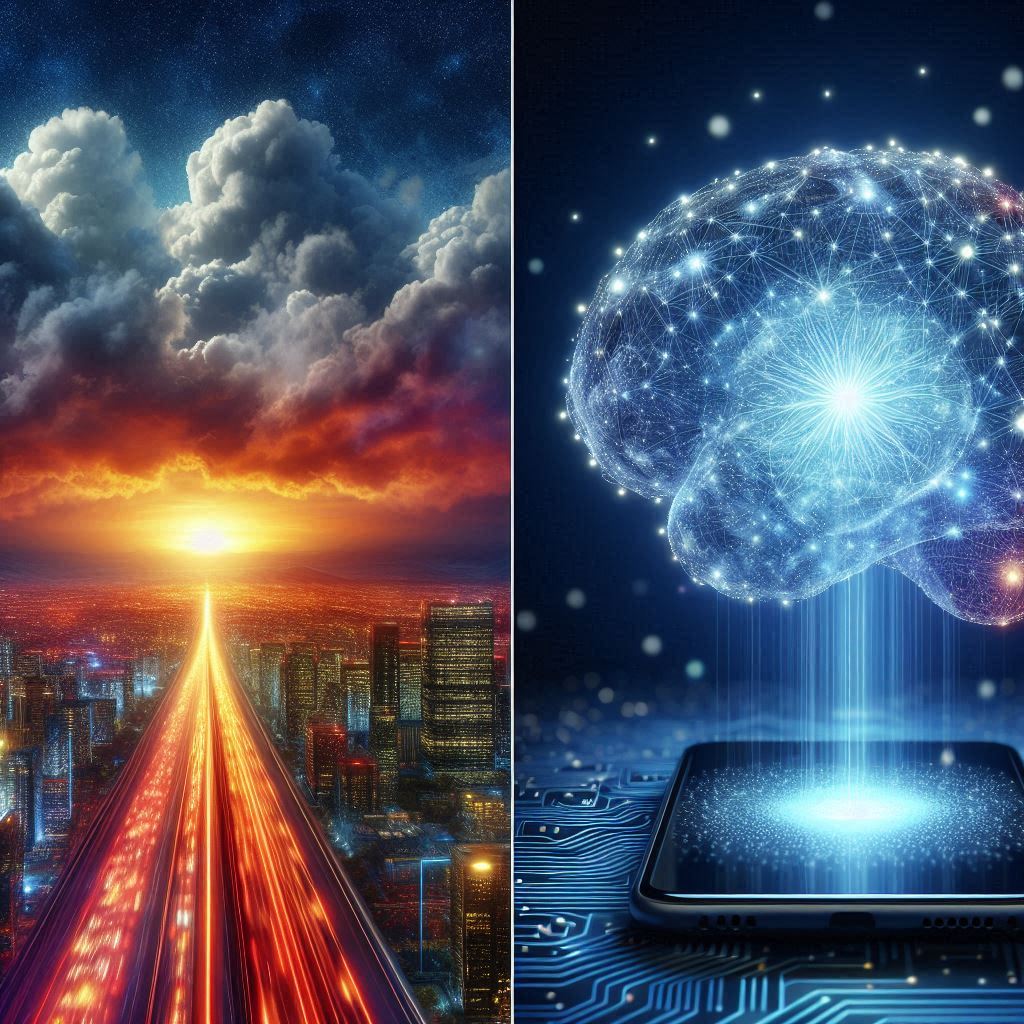
Illustrative image AI / HackStec
From Data Center to Device: The Philosophy of Embedded AI
For decades, the predominant model was: device collects data → sends it to powerful cloud servers → AI processing → returns the response. This model works, but has critical limitations:
- Latency: That noticeable delay when asking your virtual assistant something.
- Privacy: Your personal data—your voice, your face, your habits—travels across the internet.
- Connectivity: No internet, no intelligence.
- Bandwidth cost: Billions of devices constantly sending data consumes colossal infrastructure.
Embedded AI flips this logic. It brings AI processing power inside the device’s own chip. Instead of a central processor (CPU) trying to handle complex neural network tasks, specialized chips—like NPUs (Neural Processing Units)—are integrated into the hardware to execute these tasks with extreme efficiency.
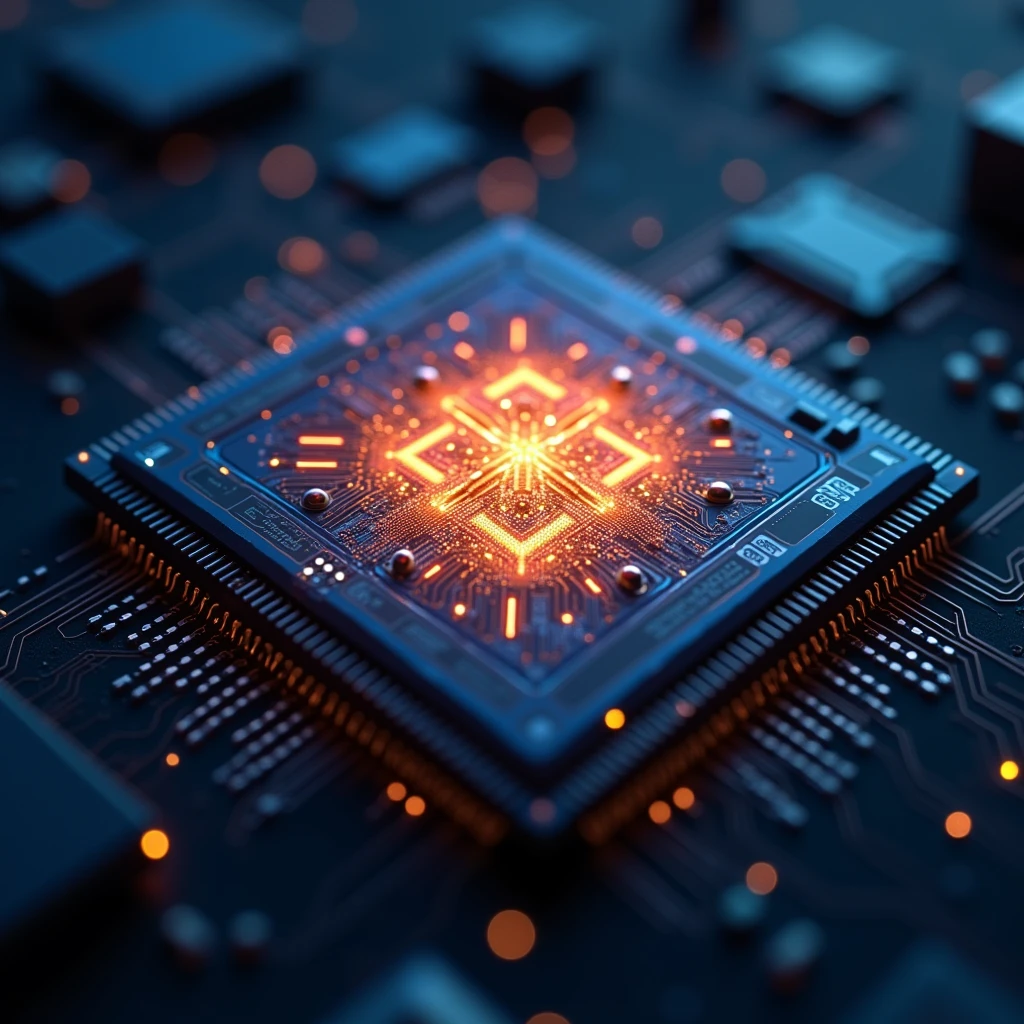
Illustrative image AI / HackStec
The Engines of Revolution: NPUs, TPUs, and Edge Computing
This migration was only possible thanks to fundamental advances in chip architecture:
- NPU (Neural Processing Unit): The heart of embedded AI. Designed specifically for the mathematical operations of multiplication and accumulation (MAC) that are the foundation of neural networks. It’s what allows your phone’s camera to process a night mode photo in milliseconds.
- TPU (Tensor Processing Unit): Developed by Google, it’s an even more specialized AI accelerator, initially for data centers, but now also powering edge devices and even some smartphones.
- Edge Computing: Embedded AI is the hardware piece of the puzzle; Edge Computing is the supporting network philosophy. It’s about processing data as close as possible to where it’s generated, whether in a local gateway, a regional server, or the device itself.
This combination creates the ideal scenario: devices with specialized brains (embedded) operating in intelligent, decentralized networks (edge).
The Real World Is Already Being Transformed
The theory is fascinating, but the practice is where the revolution truly shines. See where embedded AI is already at work:
📱 In Your Pocket and Your Home:
- Smartphones: Secure 3D facial recognition (Face ID), real-time text translation through the camera, advanced video stabilization, battery optimization learning your habits.
- Personal Assistants: Voice commands like “Hey Google” or “Hey Siri” processed locally, activating the device instantly, even offline.
- Security Cameras & Video Doorbells: Detect whether it’s a person, animal, or vehicle, sending specific alerts without flooding you with false notifications.

Illustrative image AI / HackStec
🏭 In Industry and Smart Cities:
- Manufacturing 4.0: Robots on assembly lines use embedded computer vision to inspect parts in real time, identifying micro-cracks invisible to the human eye.
- Healthcare: Pacemakers and continuous glucose monitors that analyze vital patterns locally and can alert to anomalies before the patient even notices.
- Precision Agriculture: Drones with embedded AI sensors fly over crops, identifying pests, diseases, or areas with irrigation deficiencies, enabling immediate and localized action.
- Autonomous Vehicles: Perhaps the most complex example. Critical decisions like emergency braking or obstacle avoidance cannot wait for a cloud connection. They are made in microseconds by embedded AI systems within the vehicle.
The Future Is Embedded (And the Challenges Ahead)
The trajectory is clear: intelligence will continue its migration from large data centers to the edge of the network—and finally, into every device. With the arrival of 5G Advanced and 6G, promising ultra-low latency and extreme reliability, embedded devices will be able to collaborate in even more complex ways, creating truly intelligent ecosystems.
But this revolution brings important questions:
- Security: If every device is a “smart point,” how do we protect them against distributed attacks?
- Standardization: How to ensure devices from different manufacturers can “talk” and cooperate?
- Sustainability: Designing increasingly powerful chips for billions of devices requires a new approach to energy efficiency.

Illustrative image AI / HackStec
Embedded Artificial Intelligence isn’t just an incremental upgrade; it’s a paradigm shift. It signals the transition from a world where technology reacts (after consulting the cloud) to a world where technology anticipates and acts autonomously.
It makes hardware not just faster, but more perceptive and contextual. The challenge for engineers, developers, and manufacturers will be balancing this growing power with responsibility, security, and efficiency.
One thing is certain: the next decade of innovation will be defined not only by what happens in large data centers, but by what billions of intelligent, connected devices can decide on their own, right here beside us.
What about you? Have you stopped to think about how many embedded AI “brains” are already around you right now? Tell us in the comments!







Publicar comentário