6G in 2025: Is It Coming Sooner Than We Think? (Beyond the 5G Hype)
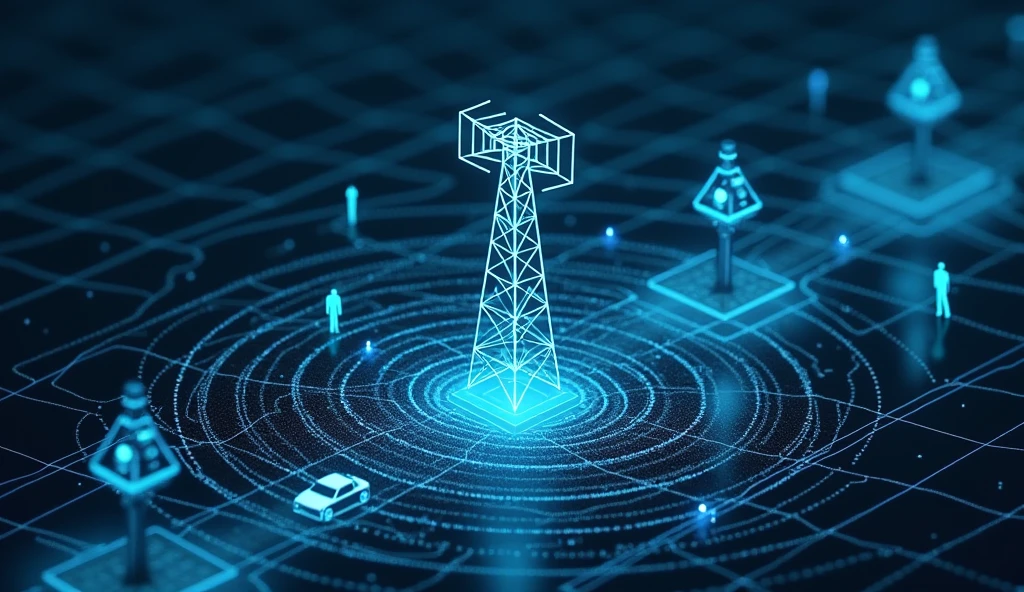
While 5G rollout continues, the race for 6G is already accelerating. Discover the real timeline, revolutionary features, and why the next connectivity leap will redefine reality itself.
Let’s be honest: for many, 5G hasn’t quite delivered on its sci-fi promises. Beyond faster phone downloads, its transformative potential—in smart cities, autonomous everything, and seamless IoT—remains largely in pilot phases. Yet, even as 5G matures, a startling truth emerges: the 6G race is already halfway down the track.
Major global alliances have formed. The Next G Alliance (North America), Hexa-X (Europe), and national initiatives in China, South Korea, and Japan are not just theorizing—they’re setting standards. Field tests of key 6G technologies are scheduled for 2025-2026. This isn’t distant futurism; it’s a strategic battleground for technological supremacy in the 2030s.
So, what comes after 5G? Imagine networks that don’t just connect devices, but fuse the physical and digital worlds with sensing capabilities, native AI, and speeds that make 5G feel dial-up. This is the 6G vision. Let’s cut through the hype and explore what’s actually coming, when, and why it matters to you.

Illustrative image AI / HackStec
1. The 6G Timeline: Reality Check for 2025
First, let’s ground expectations. The official ITU-R (International Telecommunication Union) vision for 6G will be finalized around mid-2025, with full standards expected by 2028-2030.
The 2025 Milestones (What’s Happening Now):
- Standardization Kick-off: The crucial study groups are defining what 6G actually is—peak data rates (1 Tbps?), latency (sub-1ms?), and key use cases.
- Spectrum Wars: The battle for the “golden frequencies” (especially the sub-THz bands between 100 GHz and 300 GHz) is intensifying. These bands offer immense bandwidth but have short range.
- Early Prototyping: Companies like Nokia, Ericsson, and Samsung are already demonstrating 6G-proof concepts: AI-native air interfaces, joint communication and sensing, and reconfigurable intelligent surfaces.
Realistic Launch Window: Expect the first commercial 6G networks around 2030, with early adopters being enterprise and industrial applications, not consumers. Your 5G phone won’t be obsolete anytime soon.
The Bottom Line: 2025 is not about 6G phones. It’s about laying the architectural and political foundation for the next decade of connectivity.

Illustrative image AI / HackStec
2. Beyond Speed: The 3 Revolutionary Pillars of 6G
Forget just “faster internet.” 6G’s true disruption lies in three paradigm shifts:
Pillar 1: The Network as a Sensor
This is the game-changer. 6G infrastructure (towers, devices) will use radio signals not just to communicate, but to sense the environment with extreme precision.
- How it works: By analyzing subtle changes in signal reflection, the network can map a room, detect movement, measure vital signs (heartbeat, breathing), or identify materials—all without cameras.
- Use Case: A smart factory where the network itself monitors equipment health, tracks inventory in real-time, and ensures worker safety, all while providing connectivity.
Pillar 2: Native AI & Machine Learning
AI won’t just run on the 6G network; it will be baked into its core.
- How it works: Distributed AI algorithms will manage the network in real-time, allocating resources, predicting congestion, and optimizing itself for billions of simultaneous connections (massive IoT).
- Use Case: Self-optimizing city traffic systems where the network instantly reroutes bandwidth from a quiet park to a crowded stadium event before congestion happens.
Pillar 3: Extreme Performance & New Frequencies
- Terahertz (THz) Bands: Frequencies above 100 GHz will enable staggering speeds for short-range, ultra-high-capacity links (e.g., instant wireless VR headset downloads, holographic telepresence).
- Sub-1ms Latency: This isn’t just for gaming. It enables tactile internet—remote control of robotics with true haptic feedback, allowing surgeons to operate remotely with “feel.”
- 3D Coverage: Integrated satellite, aerial (HAPS), terrestrial, and underwater networks for truly global, seamless coverage.
Illustrative image AI / HackStec
3. The Killer Apps: What Will 6G Actually Enable?
The applications sound like science fiction, but they’re the target:
- Digital Twins of Entire Cities: Real-time, millimeter-accurate virtual replicas of physical spaces for simulation, planning, and disaster management.
- Ubiquitous Extended Reality (XR): Truly wireless, high-fidelity AR glasses and VR headsets that overlay persistent digital information onto the real world.
- Precision Automation: Hyper-reliable control of swarms of drones for delivery, agriculture, and search & rescue.
- Holographic Communication: Volumetric video calling where 3D holograms of people appear in your room, not just on a screen.
4. The Challenges & The Global Race
The road to 6G is fraught with obstacles:
- Physics is Hard: THz signals are easily blocked by walls, rain, even leaves. This demands a radical densification of cells.
- Energy Hunger: More complexity and higher frequencies could skyrocket power consumption. Energy efficiency is a core 6G design goal.
- The China-West Divide: The geopolitical battle for 6G standard supremacy is already underway, with huge implications for security, trade, and technological influence.
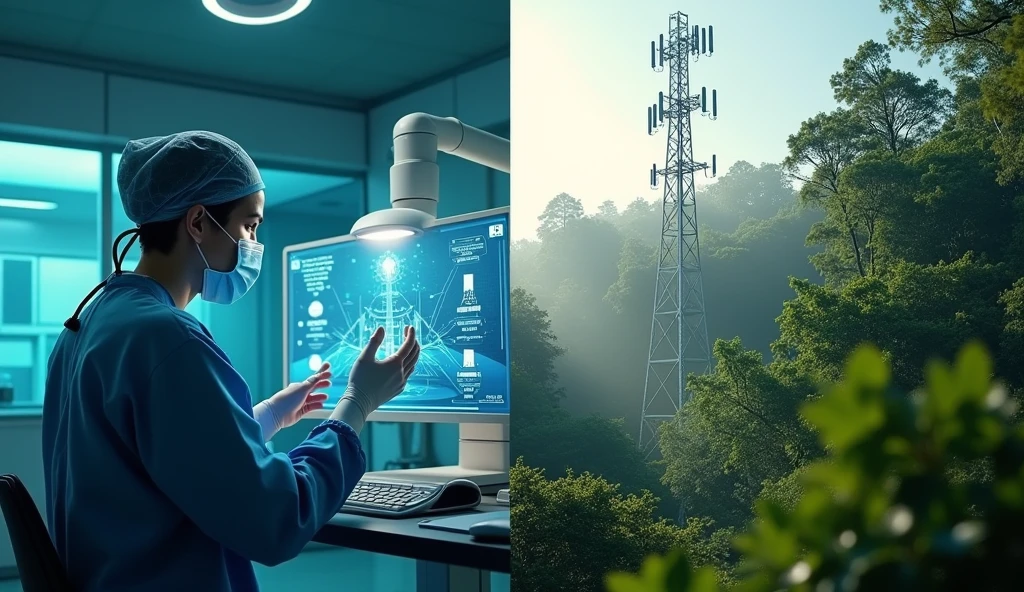
Illustrative image AI / HackStec
Conclusion: The Invisible Foundation of the 2030s
While 2025 won’t bring a 6G iPhone, it is the year the blueprint for the next decade of digital life is being drawn. 6G isn’t an incremental upgrade; it’s a fundamental reimagining of what a network is—from a passive data pipe to an intelligent, sensing fabric that weaves together reality and bytes.
For tech enthusiasts, the lesson is clear: the future of connectivity is being decided now, in standardization meetings and labs. The companies and nations that lead in 6G will define the capabilities of AI, automation, and virtual worlds in the 2030s.
What do you think will be 6G’s most transformative application? Are you more excited by the sensing capabilities or the holographic communication? And do you believe the 2030 timeline is realistic? Share your predictions below!





Publicar comentário