Radeon RX 7800 XT vs. GeForce RTX 4070: The Ultimate 1440p Value Showdown
The battle for the title of best-value graphics card for QHD (2560×1440) gaming is fiercely contested by two heavyweight contenders: the AMD Radeon RX 7800 XT and the NVIDIA GeForce RTX 4070. If you’re building or upgrading a PC aimed at the market’s sweet spot, this decision is critical. Both cards promise smooth 1440p experiences but follow radically different technological and value paths. This article dissects specifications, in-game performance, efficiency, and exclusive technologies to determine which GPU deserves a spot in your rig.
🎯 Introduction: The Perfect Setting for an Epic Battle
The 1440p GPU market has never been more compelling. While NVIDIA has solidified its lead in Ray Tracing and AI technologies with its Ada Lovelace architecture, AMD has responded aggressively with RDNA 3, focusing on raw rasterized performance and price. The Radeon RX 7800 XT and GeForce RTX 4070 find themselves at the exact center of this confrontation, often vying for the same price bracket.
Choosing between them goes beyond comparing frames per second. It involves analyzing each manufacturer’s ecosystem: the visual fidelity of DLSS 3 versus the versatility of FSR 3, power efficiency, future driver support, and, of course, the value for money spent today. This detailed analysis aims to cut through the marketing noise and deliver the data that truly matters to the gamer.
🔧 Specifications & Architectures: Two Paths to Performance
Before diving into gameplay, it’s essential to understand the engineering behind each card. The RDNA 3 (AMD) and Ada Lovelace (NVIDIA) architectures have distinct philosophies.
The GeForce RTX 4070 is built on TSMC’s refined 5nm process. Its greatest assets are the 4th Generation RT Cores and 4th Generation Tensor Cores, optimized for Ray Tracing and, crucially, for DLSS 3 with Frame Generation. It features 12 GB of GDDR6X memory on a 192-bit interface—a point often critiqued considering future, more demanding games.
The Radeon RX 7800 XT utilizes AMD’s “Chiplet” design, combining a 5nm Graphics Compute Die (GCD) with 6nm Memory Cache Dies (MCDs). It offers a wide 256-bit bus and 16 GB of GDDR6 VRAM, a strong argument for longevity. Its Ray Accelerators are competent, but its primary focus remains on traditional rasterized rendering.
| Specification | AMD Radeon RX 7800 XT | NVIDIA GeForce RTX 4070 |
|---|---|---|
| Architecture | RDNA 3 | Ada Lovelace |
| Manufacturing Process | 5nm/6nm (Chiplet) | 5nm (TSMC 4N) |
| VRAM | 16 GB GDDR6 | 12 GB GDDR6X |
| Memory Bus | 256-bit | 192-bit |
| Typical Board Power (TGP) | 263W | 200W |
| Key Exclusive Tech | FidelityFX Super Resolution (FSR) | DLSS 3, Advanced Ray Tracing |
Illustrative image AI / HackStec
🎮 In-Game Performance: Rasterization, Ray Tracing & The Upscaling Factor
This is the decisive battleground. Extensive testing across a variety of modern, demanding titles paints a clear picture of each card’s strengths.
Pure Rasterization (Ray Tracing Off)
In traditional games, the RX 7800 XT often takes the lead, offering 5% to 15% more FPS in titles like Call of Duty: Modern Warfare III, Starfield (optimized for AMD), and Hogwarts Legacy. It benefits from greater memory bandwidth and AMD’s architectural focus. The RTX 4070, however, is never far behind, consistently maintaining performance well above the 60 FPS threshold at Ultra/1440p settings.
Ray Tracing & Path Tracing
When realistic lighting is activated, the tables turn. The dedicated, more efficient RT Cores give the RTX 4070 a clear advantage, ranging from 20% to 40% in heavy titles like Cyberpunk 2077: Phantom Liberty (with Ray Tracing: Ultra) and Portal with RTX. The RX 7800 XT can handle Ray Tracing, but the performance penalty is more severe, often requiring FSR to be enabled to maintain smooth gameplay.
The Upscaling/Frame Generation Factor: DLSS 3 vs. FSR 3
This is the arena where NVIDIA seems to play a different game. DLSS 3 (Super Resolution + Frame Generation) is widely regarded as the upscaling technology with the best image quality and stability, especially at lower resolutions like 1440p. Frame Generation is transformative in supported titles, potentially doubling FPS.
AMD’s FSR 3 is a valuable, open-source response that works on any GPU, including NVIDIA’s. Its image quality, while very good, can still trail DLSS in fine details and motion stability. Its great advantage is universal support.
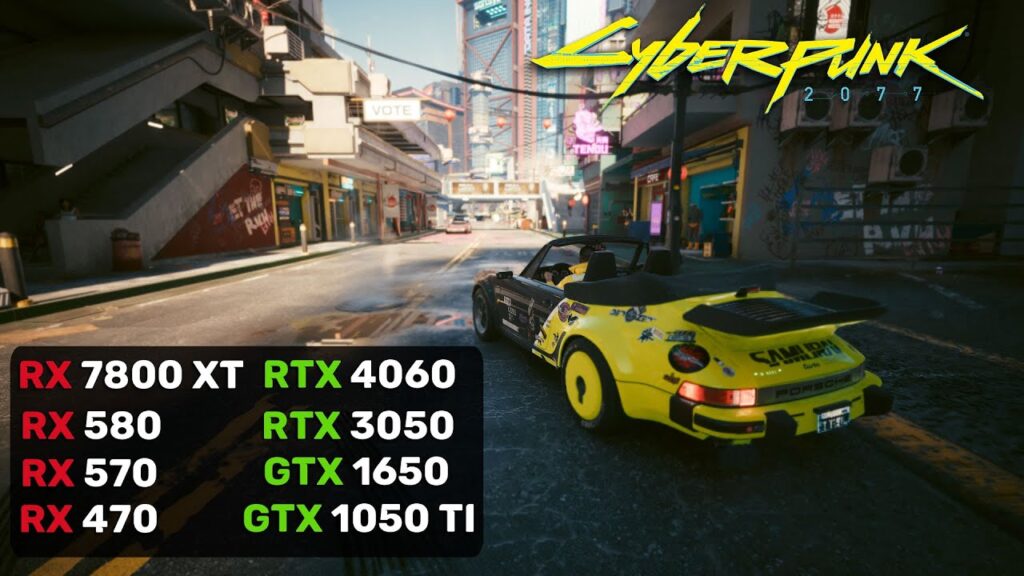
Image from the Channel: 54 FPS
⚡ Efficiency, Software & Longevity: Beyond the Benchmarks
- Power & Thermals: The RTX 4070 is an efficiency champion, with its 200W TGP notably lower than the 7800 XT’s 263W. This translates to less heat output, quieter fans, and potential for smaller form-factor builds. Custom models of the 7800 XT, however, manage heat quite well.
- Software & Drivers: AMD Adrenalin is a feature-rich suite for tuning and recording. NVIDIA GeForce Experience is known for its polish and seamless integration with streaming tools like NVENC. Driver stability has been comparable for these mature GPUs.
- The VRAM Debate (16GB vs. 12GB): The RX 7800 XT’s 16 GB is a powerful argument for longevity. Games like The Last of Us Part I and Resident Evil 4 Remake can already exceed 12 GB at maximum texture settings in 1440p. For most current games, 12 GB is sufficient, but if you plan to keep the card for 4+ years or use high-resolution texture mods, the extra VRAM offers valuable peace of mind.
✅ Conclusion: Who Should Choose Which Card?
The final choice isn’t about which card is objectively “better,” but about which one aligns perfectly with your priorities.
Choose the GeForce RTX 4070 if:
- You prioritize the best Ray Tracing experience and want access to the higher-quality DLSS 3.
- Power efficiency and a cooler/quieter system are deciding factors.
- You use creative applications (like streaming, CUDA-accelerated video editing) that benefit from NVIDIA’s ecosystem.
- You are willing to accept 12 GB of VRAM to gain an edge in cutting-edge technologies.
Choose the Radeon RX 7800 XT if:
- You seek the maximum rasterization performance for your money (it is often priced lower).
- Longevity and VRAM are your primary concerns, and you plan to keep the card for many years.
- You value an open ecosystem like FSR that works across hardware.
- Your game library includes many AMD-optimized titles or games where Ray Tracing isn’t essential.
For the 1440p gamer focused on the best immediate value in raw performance, the Radeon RX 7800 XT holds a slight edge. For the enthusiast who wants the most advanced visual technologies on the market and a more efficient platform, the GeForce RTX 4070 is a compelling offer. Both are excellent choices, but they serve distinct gaming philosophies in one of the market’s most competitive segments.







Publicar comentário